
Reading matters
Dispatches and writing advice from a midlist author misfiring in the gig economy.

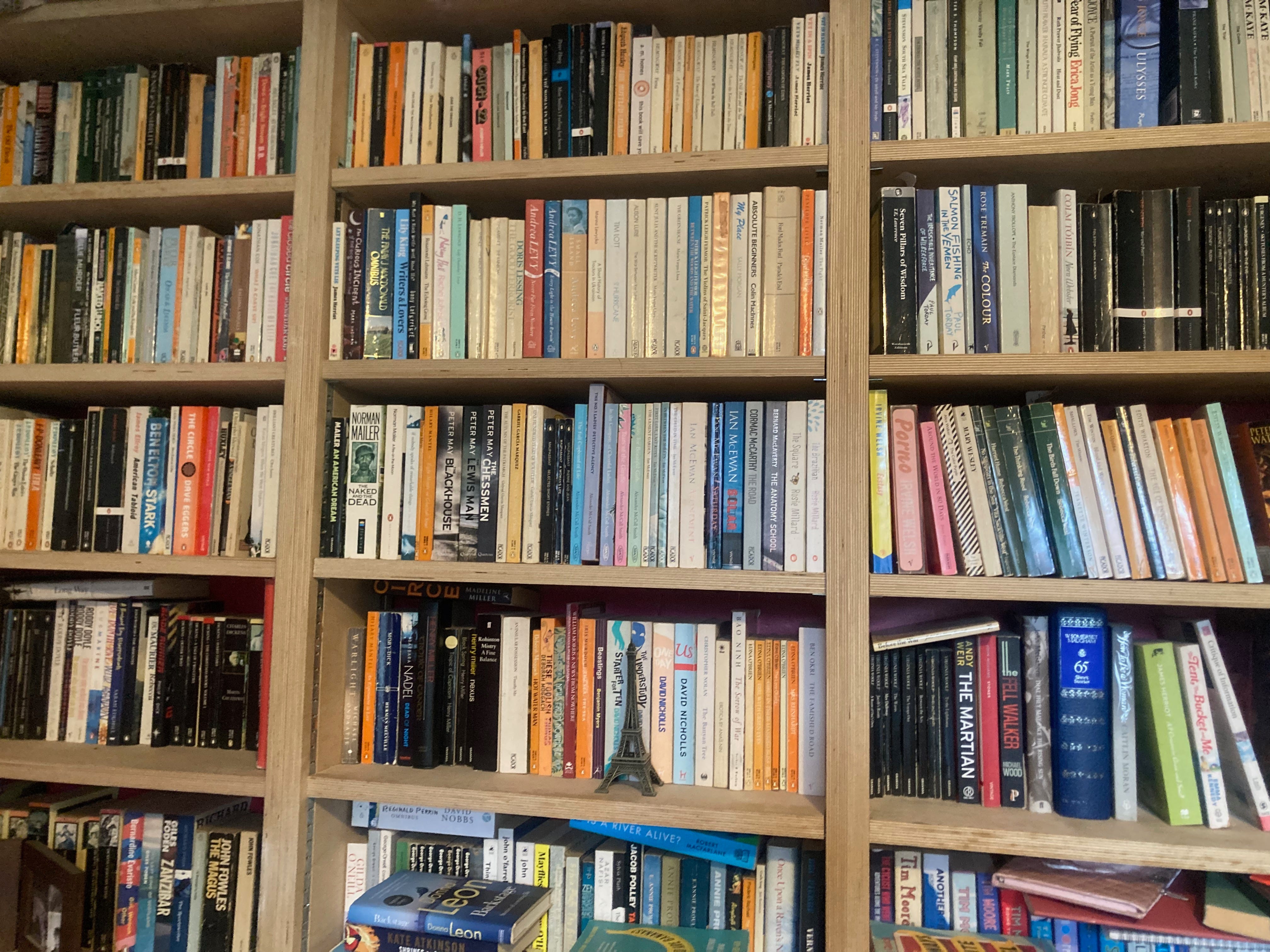
How many books did you read last year? The Guardian recently ran a feature asking this question and the answers were interesting. Chrissie Ryan, the owner of my local bookshop Book Bar had read 145 books. Librarian Olivia Young-Thompson had completed 45 books, hopefully with no fines. Book influencer Jack Edwards had read 137 books and author Jan Carson had got through a stonking 300 books.
My total last year was 17 novels and 10 non-fiction books, making a not-that-impressive total total of 27 books, though in my defence I did also read the paper every day and attend a lot of football matches. While there’s a lot to be said for slower reading in the age of metrics and step-counting. Perhaps author Derek Owusu, reader of 38 books, has it right when he tells the Guardian, “If I’ve read five books, who cares? I’m baffled by people being impressed by reading totals.”
Online people are increasingly setting themselves reading targets. But as a writer how much should you read? Quite a lot of time will be taken up with writing your own material, but reading as widely as possible will always be beneficial. It helps to go outside your preferred genre.
Being part of two book groups, one literary the other sporty, has helped me. I’ve read lots of novels I wouldn’t have normally bought, such as Summer Water by Sarah Moss, a book on Scottish holidays in the rain; a book on an AI detective called In the Blink of An Eye by Jo Callaghan; a brilliant dystopian novel in Station Eleven by Canadian writer Emily St John Randall; and a neglected novel on bombsite London after WW2 called The World My Wilderness by Rose Macaulay.
My back pages
Similarly I’ve tried to take our book group of mostly mature women out of their comfort zone with some Sally Rooney (not very popular as too much social media and whinging) and more blokey stuff, like The Martian by Andy Weir, Do Androids Dream of Electric Sheep? by Philip K Dick and Fahrenheit 451 by Ray Bradbury. With my sports book group we’ve gone beyond football to read books on rowing (The Boys in the Boat by Daniel James Brown), a forgotten cycling pioneer (Beryl by Jeremy Wilson) and the relentless life of a tennis pro in Conor Niland’s The Racket.
Whatever you read you’ll think about the author’s style, plots and inspiration. You might even think you could do better. Those books will in turn influence your own writing style and maybe generate ideas. I read lots of exotic travel books and decided it was time to do one on Essex rather than the more fashionable Santiago de Compostela with my book The Joy of Essex.
Don’t be scared to bring your reading into seemingly disparate topics. You never know where you might be able to use a bit of knowledge. The title for West Ham: Irons in the Soul was inspired by Jean-Paul Sartre’s Iron in the Soul. In Summit for the Weekend after a 20-mile mountain walk in the Lake District ended up with all the pubs having stopped serving food at 7.30pm, I likened my experience to the dad foraging for food in a post-civilisation wasteland in Cormac McCarthy’s dystopian masterpiece The Road.
Everyone’s mind palace (thanks Sherlock) is packed with influences. We shouldn’t really set reading targets, but what is important is that you read something and you read widely.
Pete May’s most recent book is Massive: The Miracle of Prague, published by Biteback. He is also the author of the memoir What Are Words Worth?
Think I only read 13 books last year, I need Pete May write more to boost my average. I did finally read The Handmaid's Tale, which is just as good as you'd hope. I saw the TV adaptation of Summerwater and my goodness it was gloomy.